
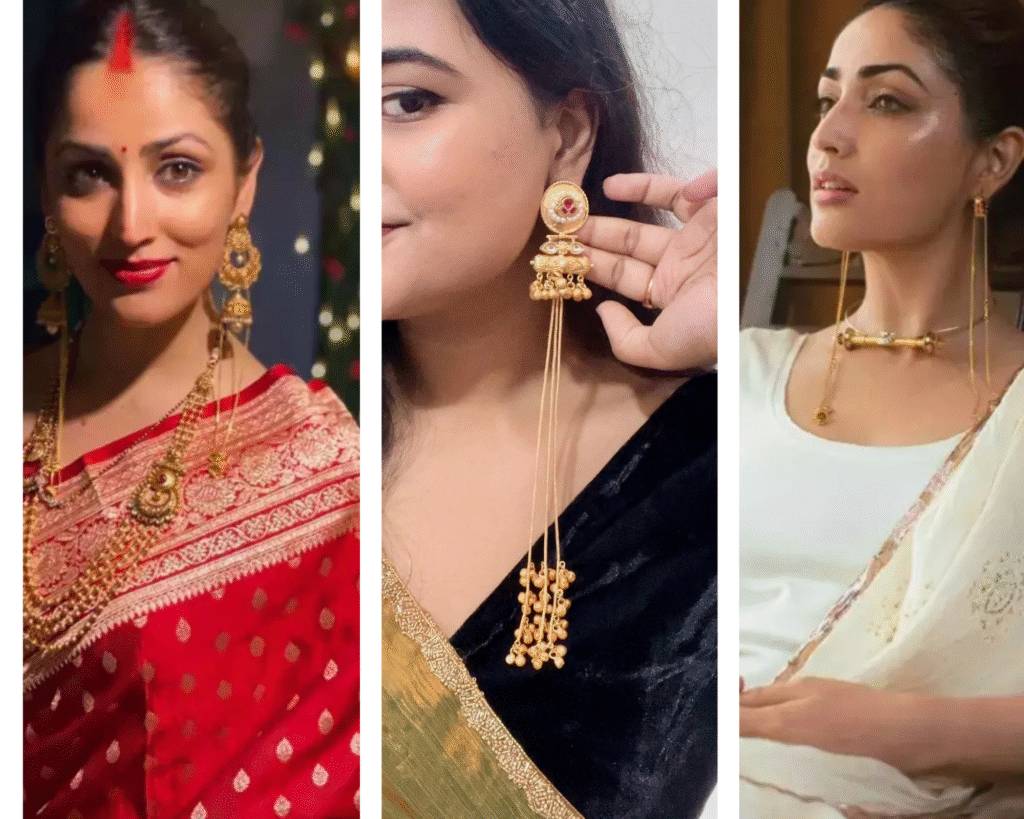
What are Kashmiri traditional earrings called? If you’ve come across a pair of intricate, dangling earrings labeled “Kashmiri” and wondered exactly what they’re called, there are two specific names to know — dejhoor and jhumka. Each carries its own history and cultural weight, and they’re not interchangeable terms.
This guide breaks down what Kashmiri traditional earrings are called, what each name actually means, and how the different styles differ from one another.
What Are Kashmiri Traditional Earrings Called? The Short Answer
Kashmiri traditional earrings are most commonly called dejhoor (also spelled dejhaar or dejharoos) and jhumka. Dejhoor refers to a specific type of long, dangling earring tied to Kashmiri Pandit marital tradition, while jhumka refers to the bell-shaped earring style found across Kashmiri and broader North Indian jewelry. Each name points to a distinct design with its own cultural weight, as background on the dejhoor’s origins makes clear.
Dejhoor: The Most Iconic Kashmiri Earring Name
When people specifically ask what Kashmiri traditional earrings are called, dejhoor is usually the answer they’re looking for. It’s the most culturally significant and recognizable name in Kashmiri jewelry.
What dejhoor means. Dejhoor earrings are traditionally worn by married Kashmiri Pandit women, pierced through the upper cartilage of the ear rather than the earlobe. They function similarly to how a wedding ring signals marital status in other cultures — the dejhoor is a visible marker that a woman is married.
The three parts of a dejhoor. A complete dejhoor set traditionally has three components:
- Ath — a thin gold chain, worn in place of the red thread used before marriage, that connects the earring to the hair or head
- Dejhoor — the hexagonal gold pendant itself, which gives the whole ornament its name
- Athoor — the small dangling piece, sometimes made of gold, pearls, or gold thread, attached below the dejhoor pendant
Who wears it. Dejhoor is specific to Kashmiri Pandit tradition and isn’t worn by Kashmiri Muslim women or communities outside this specific cultural group, a distinction bridal jewelry guides on Kashmiri tradition consistently note. If you’re buying a dejhoor as a gift, it’s worth knowing this cultural context rather than treating it as a generic “Kashmiri earring.”
Our dejhoor buying guide goes deeper into how to choose one, including sizing and material differences.
Jhumka: The Other Major Kashmiri Earring Name
Jhumka is the second name you’ll come across constantly when shopping for Kashmiri traditional earrings, and it’s a bit less culturally restricted than dejhoor.
What jhumka means. The word describes the bell or dome shape of the earring itself — a rounded top with a flared, hanging bottom that resembles an upside-down bell or blooming flower. Kashmiri jhumkas are typically finished with kundan setting, filigree work, or enamel detailing, which distinguishes them from jhumka styles made elsewhere in India.
Why it’s not exclusive to Kashmir. Unlike dejhoor, “jhumka” as a name and shape appears across many regional Indian jewelry traditions, not just Kashmiri. What makes a jhumka specifically Kashmiri is the craftsmanship behind it — the filigree, the kundan work, the enamel detailing — rather than the shape itself being unique to the region.
When it’s worn. Jhumkas are far more versatile than dejhoor in terms of occasion and community — they’re worn broadly across weddings, festivals, and everyday festive dressing, regardless of religious or cultural background.
Other Names You Might Come Across
Beyond dejhoor and jhumka, a few other terms show up when shopping for or researching Kashmiri-style earrings:
Kundala. This is an old Sanskrit term for earrings in general, found in historical texts referring to the region. It’s not a specific style name in modern use, but it’s worth knowing if you come across it in older references or literature about Kashmiri jewelry history.
Chandbali. While chandbali (half-moon shaped) earrings are extremely popular in Kashmiri-style jewelry collections today, the design itself is a broader North Indian style rather than one that originated specifically in Kashmir. It’s commonly paired with kundan and filigree techniques associated with Kashmiri craftsmanship, which is why the two get grouped together in shopping searches.
Ghungroo-style earrings. You’ll also see “ghungroo” used to describe a specific heavy, layered dangling style, often finished in oxidized silver or antique gold tones, that’s popular within the broader Kashmiri-inspired jewelry category.
Dejhoor vs. Jhumka: A Quick Comparison
| Dejhoor | Jhumka | |
|---|---|---|
| Shape | Hexagonal pendant with a dangling athoor | Bell or dome shaped |
| Cultural meaning | Marks marital status (Kashmiri Pandit tradition) | No specific marital or religious meaning |
| Who wears it | Married Kashmiri Pandit women specifically | Anyone, across communities and occasions |
| Occasion | Daily wear after marriage, part of bridal tradition | Weddings, festivals, everyday festive wear |
| Origin of the name | Specific to Kashmiri Pandit culture | Shape found across multiple Indian regions |
Why the Names Matter When You’re Shopping
If you’re buying Kashmiri earrings as a gift or for yourself, knowing these names helps in a few practical ways:
Avoiding a cultural mismatch. Gifting a dejhoor to someone outside the Kashmiri Pandit community, or to an unmarried woman, misses the cultural context the piece carries. A jhumka or chandbali is a safer, more universally appropriate choice if you’re not certain about that context.
Searching more precisely. “Kashmiri earrings” as a search term returns a wide mix of styles. If you specifically want the marital-tradition piece, search for “dejhoor” directly. If you want the festive bell-shaped style, “jhumka” gets you there faster.
Understanding what you’re paying for. Dejhoor sets involve more components (the ath, dejhoor, and athoor) and are usually priced accordingly, while jhumkas vary more widely based on the intricacy of the kundan or filigree work.
If you’re shopping around a specific occasion, our guides on wedding earrings and Raksha Bandhan gifting go into which style fits which event.
Frequently Asked Questions
What is the most traditional Kashmiri earring called?
Dejhoor is generally considered the most culturally specific and traditional Kashmiri earring name, tied directly to Kashmiri Pandit marital customs. Jhumka is also traditional but isn’t unique to Kashmiri culture in the same way.
Is dejhoor the same as jhumka?
No. Dejhoor is a specific hexagonal-pendant earring tied to marital status in Kashmiri Pandit tradition, while jhumka refers to the bell-shaped earring style found in Kashmiri and broader Indian jewelry. They look different and mean different things.
Can anyone wear dejhoor earrings?
Anyone can wear them as jewelry, but it’s worth knowing that dejhoor traditionally signals marital status specifically within Kashmiri Pandit culture. If cultural accuracy matters for how you’re using the piece, that context is worth being aware of.
Why are Kashmiri earrings often called by different names online?
Because “Kashmiri earrings” is used as a broad shopping category covering multiple distinct styles — dejhoor, jhumka, chandbali, and ghungroo-style pieces — that each have their own specific name and origin, even though they’re often marketed together.
What material are traditional Kashmiri earrings usually made of?
Traditional pieces are typically gold or gold-plated, often featuring kundan stone setting, filigree wirework, or enamel detailing — techniques closely associated with Kashmiri craftsmanship.
Key Takeaway
So, what are Kashmiri traditional earrings called? The two names to know are dejhoor — the culturally specific, marital-tradition earring worn by Kashmiri Pandit women — and jhumka — the more widely worn, bell-shaped festive earring. Knowing the difference helps you shop more precisely and choose a piece that actually fits the occasion or person you have in mind.